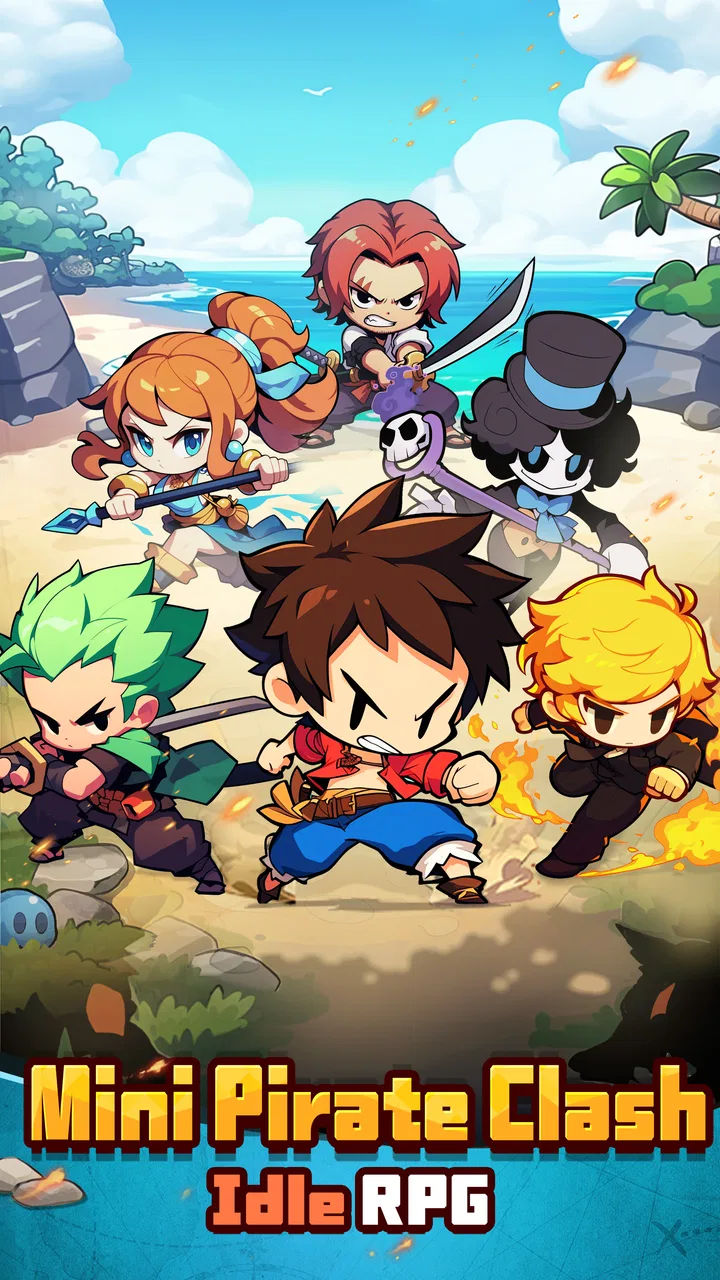
Mini Pirate Clash
- 4.5
- Rating
- 100.00K
- Installs
- Free
- Price

 Analysis by App-foxy
I spent time with Mini Pirate Clash, a free role-playing game from Niuxinrong Information Technology Co., Ltd., and the part that stayed with me was its focus on quick pirate battles. The premise is easy to understand: you step into a miniature pirate world, prepare for clashes, and make decisions that matter within a compact adventure format. It is not trying to present itself as a huge simulation of sailing life. Its appeal is the promise of getting into a battle quickly and enjoying the feeling of building momentum from one encounter to the next.
That focused approach makes it easier to recommend to someone who wants a light role-playing game rather than a demanding, long-session experience. At the same time, I would not describe it as a perfect fit for every player. Anyone looking for a deep story, a highly realistic naval game, or a carefully balanced experience with no spending pressure may want to compare it with more established alternatives first. My impression is that Mini Pirate Clash works best when treated as an accessible pirate-themed game for short, repeat visits.
The battle-centered idea that defines Mini Pirate Clash
The most important capability here is the way the game puts battle at the center of the experience. Instead of asking me to spend most of my time learning a complicated world before anything happens, it presents the pirate theme through direct conflict and progression. That gives the game a clear identity, even though the short store description is deliberately brief.
You May Also Like

 AccuWeather: Weather Radar
AccuWeather Review: A Quick, Clear Forecast for Everyday Decisions
For everyday plans, the best forecast is the one you can understand quickly. AccuWeather makes rain timing, radar, and local conditions easy to act on, with a few trade-offs.

 Hill Climb Racing
Why Hill Climb Racing Still Turns Crashes Into One More Run
A tiny car, a bumpy hill and one more upgrade: Hill Climb Racing keeps resurfacing because its simple chaos makes every near-miss feel personal.

 AliExpress - Shopping App
AliExpress Makes Global Shopping Feel Personal, but Shoppers Bear the Risk
AliExpress turns a global marketplace into a pocket-sized discovery engine. Its reach is useful, its shopping loop compelling, and its trade-offs easy to miss.

 Lords Mobile: Kingdom Wars
Lords Mobile Is a Kingdom-Building Routine, Not a Quick Match
A case-by-case verdict on the building, battles, device demands, and social commitments that make Lords Mobile rewarding for some players and exhausting for others.

 PDF Scanner app - TapScanner
TapScanner Makes Paperwork Easier to Capture, Check, and Share
TapScanner makes scanning with a phone feel less like a rescue operation and more like a dependable step in getting work done. Its capture tools are useful, though not flawless.

 Block Blast!
 Shows How Much a Puzzle Game Can Leave Out
A quiet grid game shows why puzzle players increasingly value instant clarity, repeatable skill and low-pressure play—and where the genre still needs to catch up.
More From Our News Desk
View All News


In practice, this battle-first design changes how I approach the game. I am not opening it expecting a long cinematic role-playing session. I am opening it when I want a compact loop: enter the pirate setting, make a tactical choice, see the result, and decide whether I want another round. That rhythm is particularly useful on a phone, where interruptions are common and a game needs to communicate its purpose quickly.
The role-playing label matters because the battles are not only about tapping through isolated encounters. The attraction comes from feeling that my choices and progress shape how well I handle the next challenge. Even when the individual actions are simple, the surrounding sense of improvement gives each return visit a reason. The game feels more inviting when I think of it as a small progression journey rather than a single arcade match.
The strongest idea is not the pirate theme by itself, but how that theme gives the battle loop a recognizable personality. Many mobile games can offer quick fights, yet a pirate setting makes the experience easier to remember. The compact presentation also helps keep the game approachable for players who might be put off by a role-playing title filled with menus, lore, and lengthy tutorials.
What the battle focus changes for new players
For a newcomer, the advantage is a low barrier to entry. I do not need to arrive with detailed knowledge of pirate fiction or role-playing conventions to understand the basic attraction. The game communicates through action: prepare, clash, learn from the result, and continue. That makes it suitable for someone trying the genre for the first time, especially if they prefer discovering systems by playing instead of reading extensive explanations.
There is also a useful psychological benefit to a compact battle structure. A loss feels like information rather than a complete waste of time. I can reflect on what went wrong and try again without feeling that I have abandoned a large campaign. This is one reason I found the game more comfortable in short sessions than games that require a major time commitment before progress becomes visible.
However, the same focus can feel narrow if I want variety above all else. Players who enjoy managing a large crew, exploring a broad map, or making many different kinds of non-combat decisions may find the battle emphasis restrictive. The game’s identity is clearer because it concentrates on clashes, but concentration always means that some other parts of the pirate fantasy receive less attention.
How the core loop feels during ordinary play
My preferred way to play was in small blocks of time rather than treating it like a full evening game. I would open it when I had a few minutes, complete a battle-oriented stretch, and stop before the session became repetitive. That approach suits the game’s compact concept and also helps me judge each encounter on its own terms instead of rushing through too much content at once.
The practical question for a new player is whether the game gives enough feedback to make decisions feel worthwhile. A battle system can be quick without being satisfying if the result seems random or if every action produces the same outcome. In Mini Pirate Clash, the value of the role-playing layer comes from paying attention to progress and learning how to approach the next clash more carefully. I recommend resisting the temptation to tap through everything automatically. Even a short battle deserves a moment of planning.
One useful habit is to treat early attempts as experiments. Rather than spending resources immediately whenever a new option appears, I would first observe what kind of challenge the game is presenting. That helps preserve flexibility for the next encounter and reduces the frustration of discovering that a rushed upgrade or purchase did not solve the real problem. This is a small but important distinction between playing actively and simply moving through prompts.
Another practical tip is to separate “I lost” from “my setup is permanently wrong.” In a progression-focused role-playing game, a setback can come from timing, preparation, or an incomplete understanding of the available choices. I found it more useful to change one thing at a time and see whether that improved the next attempt. Changing everything at once makes it hard to know what actually helped.
A sensible routine for short sessions
If I were introducing the game to a friend, I would suggest a simple routine. Start with a few battles without spending money, notice which decisions have the biggest effect, and only then decide whether the progression is enjoyable enough to continue. This gives the player a fair impression of the game’s central capability instead of judging it through the excitement of the first few minutes alone.
I would also recommend playing with a clear stopping point. The battle loop can encourage “one more attempt,” especially after a close result. That is enjoyable when I am choosing it deliberately, but it can become tiring if every session turns into repeated retries. Taking a break after a difficult encounter makes it easier to return with a fresh view instead of reacting emotionally to a loss.
For a parent or guardian considering the game for a teenager, the content rating is Teen, so it is worth checking whether that audience matches the player in question. The game is free to start, but it includes in-app purchases ranging from $0.99 to $299.99 per item. I would therefore recommend setting a spending limit before handing it to a younger player, particularly because progression-based games can make optional purchases feel tempting during a difficult stretch.
The best everyday scenario for this pirate RPG
The clearest use case is a short break during a commute, a lunch period, or a quiet moment at home. Imagine having enough time for a few focused battles but not enough time to settle into a large console-style adventure. Mini Pirate Clash fits that gap better than a sprawling role-playing game because its central promise is immediate action rather than a long setup.
I also think it suits players who like a sense of progress but do not want to maintain a complicated collection of systems. The pirate setting adds flavor, while the battle-centered structure keeps the purpose of each session visible. If I have only a little attention available, I can still understand what I am trying to do and why the next encounter matters.
It is less convincing as a background game while I am doing something else. The choices deserve attention, and playing carelessly can make the results feel arbitrary. I would not recommend opening it while multitasking heavily, especially if I am trying to learn how its progression works. A few attentive minutes are more rewarding than a longer session in which I barely notice what I am doing.
Compared with a traditional turn-based role-playing game, this is the better choice when I want less preparation and a more direct route to a clash. Compared with a pure action game, it is the better choice when I want battles to sit inside a progression journey rather than exist as disconnected rounds. A large pirate adventure will usually offer more exploration and atmosphere, while Mini Pirate Clash is more convenient when I want the recognizable theme in a smaller package.
When another type of game is the wiser choice
I would steer a player toward a deeper role-playing alternative if their priority is a rich narrative with extensive character relationships and a large world to explore. I would choose a dedicated strategy game instead if the main attraction is detailed resource management, long-term planning, or complex map control. Mini Pirate Clash makes more sense for someone who values accessibility and a battle-led structure over breadth.
It may also be a poor match for players who dislike in-app purchases on principle. The free entry point is helpful, but the presence of high-priced individual purchase tiers means I would approach the progression carefully. I would not assume that spending is necessary to enjoy the game, yet I would still keep an eye on how optional purchases are presented and avoid making an impulse decision after a frustrating loss.
Device compatibility is relatively broad for Android users because the game requires Android 6.0 or later. That makes it a practical candidate for people who do not own a recent phone, although actual comfort will still depend on the device’s performance and available storage. The current version is 1.0.3, so I would keep the game updated through the normal app store process when updates are offered, particularly if I encounter a technical issue.
Tradeoffs that become clearer after continued play
The biggest tradeoff is focus versus variety. The battle capability gives the game a clean identity, but it also means that players who need constant changes of activity may tire of the loop sooner. I enjoyed the clarity at first because I knew what the game wanted me to do. Over time, however, the experience depends heavily on whether the progression continues to make each clash feel meaningfully different.
A second tradeoff is convenience versus depth. Short battles are easier to fit into daily life, but a compact format can leave less room for the slow decision-making that some role-playing fans love. I would not call that a flaw in isolation; it is a design choice. The important point is to choose the game for its directness rather than expecting it to behave like a full-scale role-playing epic.
The third tradeoff involves free access and spending temptation. Being able to start without paying lowers the risk of trying it, which I appreciate. Yet the listed purchase range means I would create my own rules before playing: no purchase during a losing streak, no buying simply to skip a moment of difficulty, and no spending until I know I will keep returning. Those rules protect the enjoyable part of the game from turning into a source of regret.
I also think the game rewards patience more than impatience. Rushing through the early experience can make it seem simpler than it is, while overanalyzing every small decision can make it feel heavier than intended. The useful middle ground is to notice patterns, adjust one choice at a time, and accept that not every failed battle needs an immediate solution.
Who gains the most from its design
The best audience is someone who likes pirate flavor, wants role-playing progression, and prefers battles that can fit into a mobile routine. It is especially suitable for a player who enjoys learning through repeated attempts and does not need a huge world to stay interested. The game’s free price also makes it easy to test without committing money at the start.
Teen players may appreciate the accessible structure, but I would still encourage adults to discuss purchase limits because of the available in-app purchase tiers. For an older player, the main question is not whether the game is technically approachable; it is whether the focused battle loop offers enough variety to justify returning regularly.
The game has already attracted a visible audience, with an average rating of 4.5 from around 9.3 thousand ratings and more than 100 thousand installs. Those figures suggest that the concept has found interest among mobile players, but they should not replace personal testing. A rating cannot tell me whether the pace, depth, or spending model suits my own habits.
Niuxinrong Information Technology Co., Ltd. has positioned the release as a role-playing game rather than a purely casual action title, and that distinction helped shape my expectations. I looked for progression and decision-making around the battles instead of judging it only by how quickly an encounter begins. That is the right lens for understanding the game: its value lies in the relationship between repeated clashes and the feeling of becoming better prepared.
My recommendation after playing Mini Pirate Clash
I would recommend Mini Pirate Clash to a friend who wants a free pirate-themed role-playing game built around quick battles and gradual improvement. I would describe it as an easy game to try, simple to fit into a busy day, and more rewarding when played with a little attention rather than treated as mindless tapping.
I would also be honest about the limits. It is not my first recommendation for someone seeking a large story, extensive exploration, or a completely purchase-free progression experience. The battle-centered design is its clearest strength and its most important constraint at the same time. If that loop is what you want, the focus helps the game feel purposeful. If you want a broad pirate simulation, the compact structure may feel too narrow.
My final advice is to play the opening sessions without spending, establish a personal budget if you decide to continue, and pay attention to whether each return visit gives you a new decision to make rather than merely another fight to repeat. For the right player, that balance can make Mini Pirate Clash a pleasant pocket-sized adventure. For everyone else, a deeper role-playing or strategy alternative will probably provide more lasting satisfaction.
FAQs for Mini Pirate Clash
01What is Mini Pirate Clash and how does it work?
Mini Pirate Clash is a strategic adventure game where players build and command a pirate fleet. The objective is to conquer territories, battle rival pirates, and collect treasures. Players can upgrade their ships and recruit crew members to enhance their power and strategic options, making each clash unique and engaging.
02Is Mini Pirate Clash free to play, and are there in-app purchases?
Yes, Mini Pirate Clash is free to download and play. However, it offers in-app purchases that allow players to buy game currency, upgrade resources, and unlock special features. These purchases can enhance the gaming experience but are not necessary to enjoy the game fully.
03What are the system requirements for Mini Pirate Clash on Android and iOS?
To run Mini Pirate Clash on Android, you need a device with Android 5.0 or higher. For iOS, the app requires iOS 10.0 or later. It’s optimized for both phones and tablets, ensuring a smooth gaming experience across a wide range of devices.
04Does Mini Pirate Clash require an internet connection to play?
Mini Pirate Clash does require an internet connection for certain features, such as multiplayer battles and leaderboard updates. However, there are offline modes available where players can enjoy the game without an active internet connection, focusing on single-player missions and challenges.
05How can players connect with friends in Mini Pirate Clash?
Players can connect with friends by linking their game account to social media platforms or inviting friends via unique game codes. This allows for cooperative gameplay, where friends can join forces to tackle challenges and compete against other teams in exciting pirate battles.
Pros
- Engaging and colorful graphics.
- Simple controls for easy play.
- Frequent updates with new content.
- Multiplayer mode for competitive fun.
- Low resource usage on devices.
Cons
- In-app purchases can be costly.
- Requires constant internet connection.
- Ads can be intrusive at times.
- Limited characters without purchase.
- Occasional lag in multiplayer mode.

Mini Pirate Clash
Gallery